Oxford Centre for
Hindu Studies Online
Oxford Centre for
Hindu Studies Online
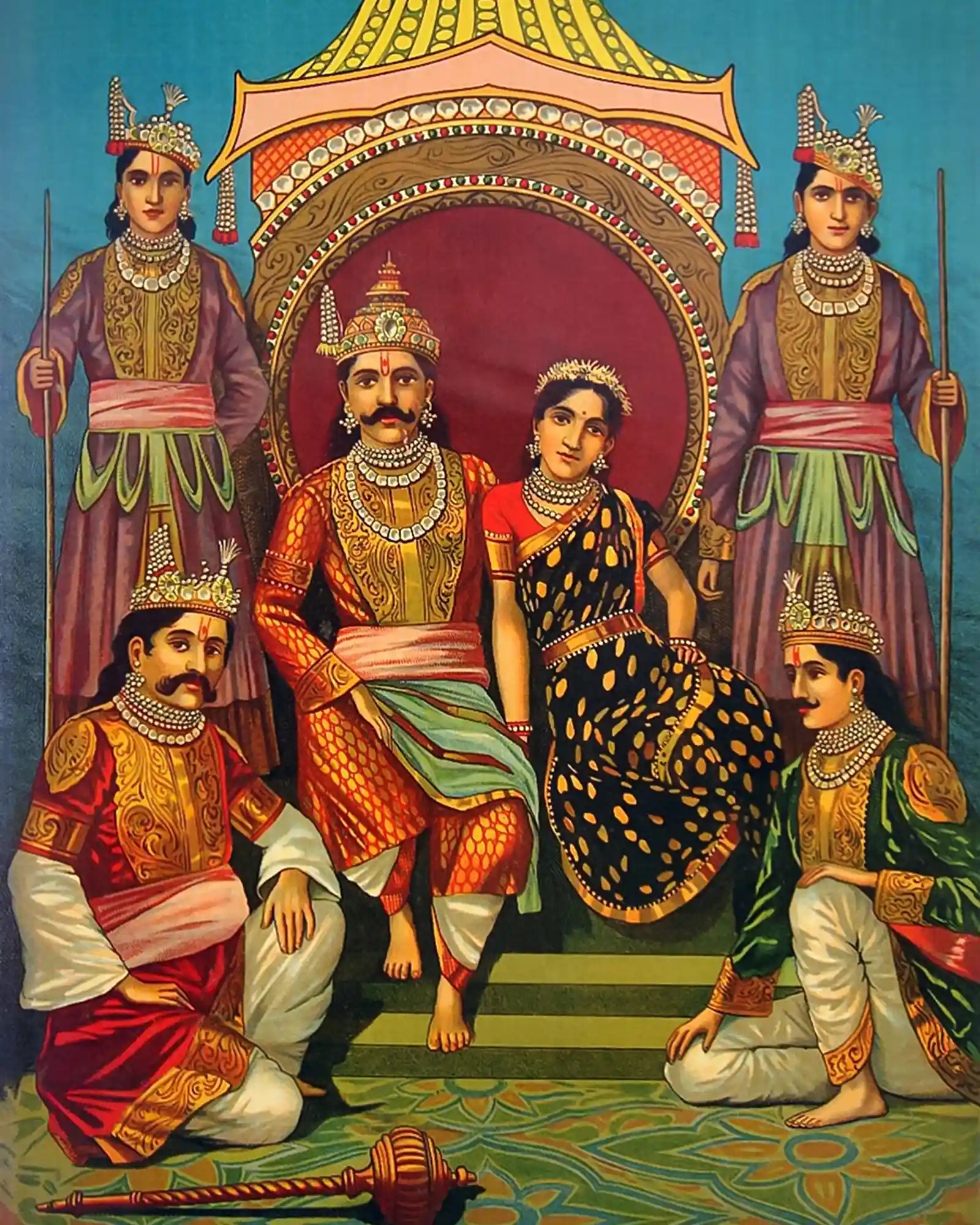
The Mahabharata is the longest epic poem ever composed: over 200,000 lines telling of the war between the Pandavas and the Kauravas, of Krishna’s part in it, and of the order of dharma the war throws into question. Much of Hinduism as we know it took shape through this text.
In this seven-week course we begin with a survey of all eighteen parvans, then study the principal characters, from Arjuna and Bhishma to Karna, and the three great women of the epic, Draupadi, Gandhari, and Kunti. From there we turn to Kṛṣṇa as avatara of Vishnu in one of the earliest works of Vaishnava theism, to the meaning of dharma, and finally to the philosophical teachings of the Shanti and Anushasana parvans.
The course was created by Dr Nick Sutton, who has been teaching and writing on the Mahabharata for four decades, and is tutored by Dr Raj Balkaran, a scholar of Sanskrit narrative texts. There are weekly video lectures (nearly eight hours in all), 255 pages of course notes, and an essay for a Completion Certificate. No prior knowledge is needed. For a self-paced survey of both epics, see our on-demand Mahabharata and Ramayana course.
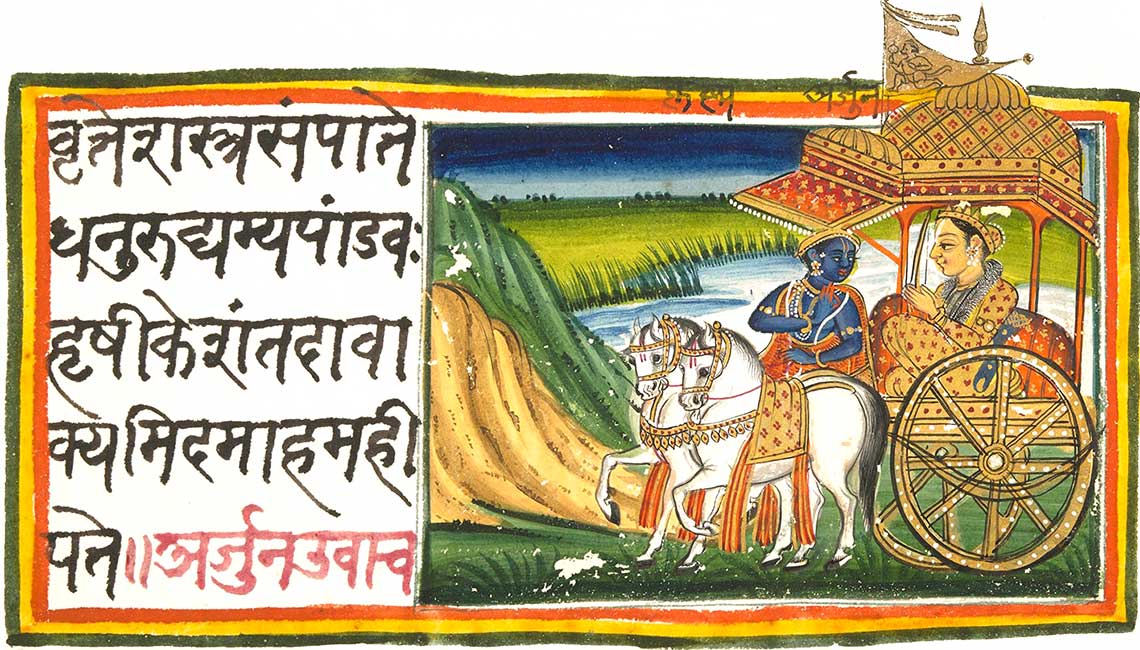
We begin by giving a sense of the size and scope of the Mahabharata. This is truly a vast work that not only presents a complex narrative with many different strands and subplots, but also extensive passages of religious, philosophical, moral, and practical instruction.
Here we provide an outline of the text by presenting a review of all of its eighteen parvans (limbs or sections). What sort of text this is? Who wrote it and when? What is it really about and what are its principal roles in the religious, cultural, and social life of India?
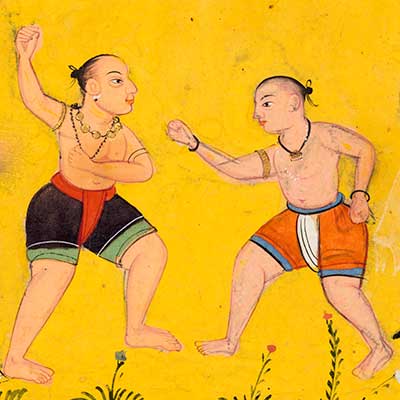
Mahabharata highlights its central truths through complex characterisations: some virtuous and admirable individuals and others bereft of elevated human instincts.
By placing each character in a range of situations it shows the problems, tensions, and genuine dilemmas we all face in seeking to attain the fullness of our humanity. The main characters we look at here are:
Women have a central role in the Mahabharata. We look at teachings on gender roles, specifically the dharma of women. We contrast the text’s ideas on female dharma with the actions of the three principal female characters: Draupadi, Gandhari, and Kunti.
The Mahabharata is a deeply spiritual account of divine intervention in the world.
We explore how divine nature and identity are presented within the text, with the focus on Krishna as an avatara of Vishnu. Mahabharata is one the earliest remaining works of Vaishnava theism, and in this session we look at the Vaishnava doctrines it presents to its readers.
We will also see the role of Shiva in the narrative and the nature of the relationship between Vishnu and Shiva.
We conclude with a look at monotheism, monism, and polytheism within Indian religion as a whole, as well as the understanding that liberation from rebirth is attained not just through personal enlightenment, or yogic perfection, but also as a gift of divine grace.
Dharma is arguably the principal theme of the Mahabharata and is discussed at length in a number of passages. In this session we develop a clear definition of the term ‘dharma’.
The wise say that dharma is whatever is based on love for all beings.
This is the characteristic mark that distinguishes dharma from adharma, Yudhishthira.
(Mahabharata, 12.251.24)
Religious, ethical, and practical instruction collectively comprise almost half the chapters in the Mahabharata. And it is after the battle is over that the Mahabharata takes the form of a didactic work. Within the 353 chapters of the Shanti-parvan (Book 12), 185 chapters (168–353) from what is known as the Moksha-dharma-parvan. It is this collection of religious and philosophical discourses that we will be turning our attention to.
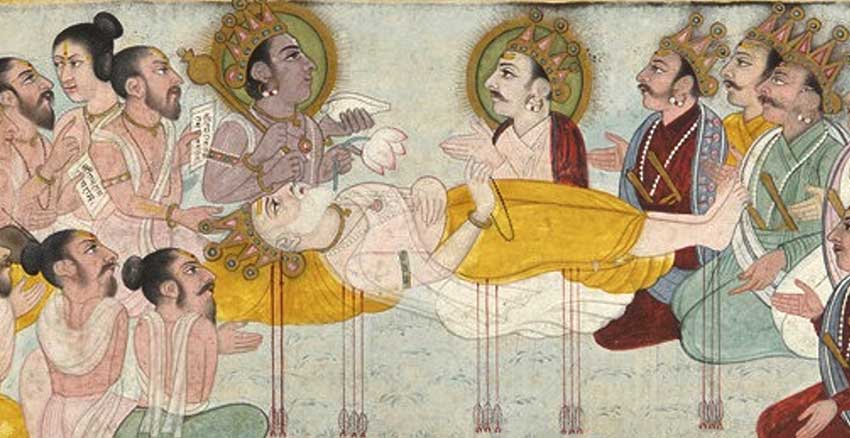
For this final session we move to the thirteenth book of the Mahabharata, the Anushasana–parvan. Here we find a continuation of the extensive forms of instruction imparted by Bhishma to Yudhishthira that covered almost all of the Shanti-parvan, though here the topics considered are far more varied.
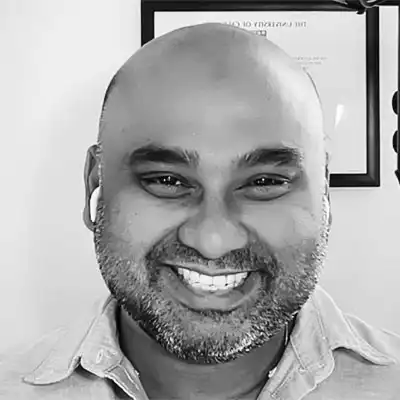
Course Tutor
Dr Raj Balkaran is a scholar of Sanskrit narrative texts and the author of The Goddess and the King in Indian Myth (Routledge 2018), The Goddess and the Sun in Indian Myth (Routledge 2020). Having taught comparative religion and mythology at the University of Toronto School of Continuing Studies for a decade, he now Tutors at the Oxford Centre for Hindu Studies where he also serves on the Continuing Education Department’s Course Development Board. Alongside his academic training, he has received extensive spiritual training as part of an oral tradition dedicated to the transmission of Indian wisdom teachings. Integrating his academic and spiritual training, he has founded the online School of Indian Wisdom where he designs and delivers original online courses centred on the practical life wisdom to be found in the philosophical, mythological and spiritual traditions of ancient India. Beyond teaching and research, Dr Balkaran runs a thriving life consulting practice and hosts the New Books in Indian Religions podcast.