Oxford Centre for
Hindu Studies Online
Oxford Centre for
Hindu Studies Online
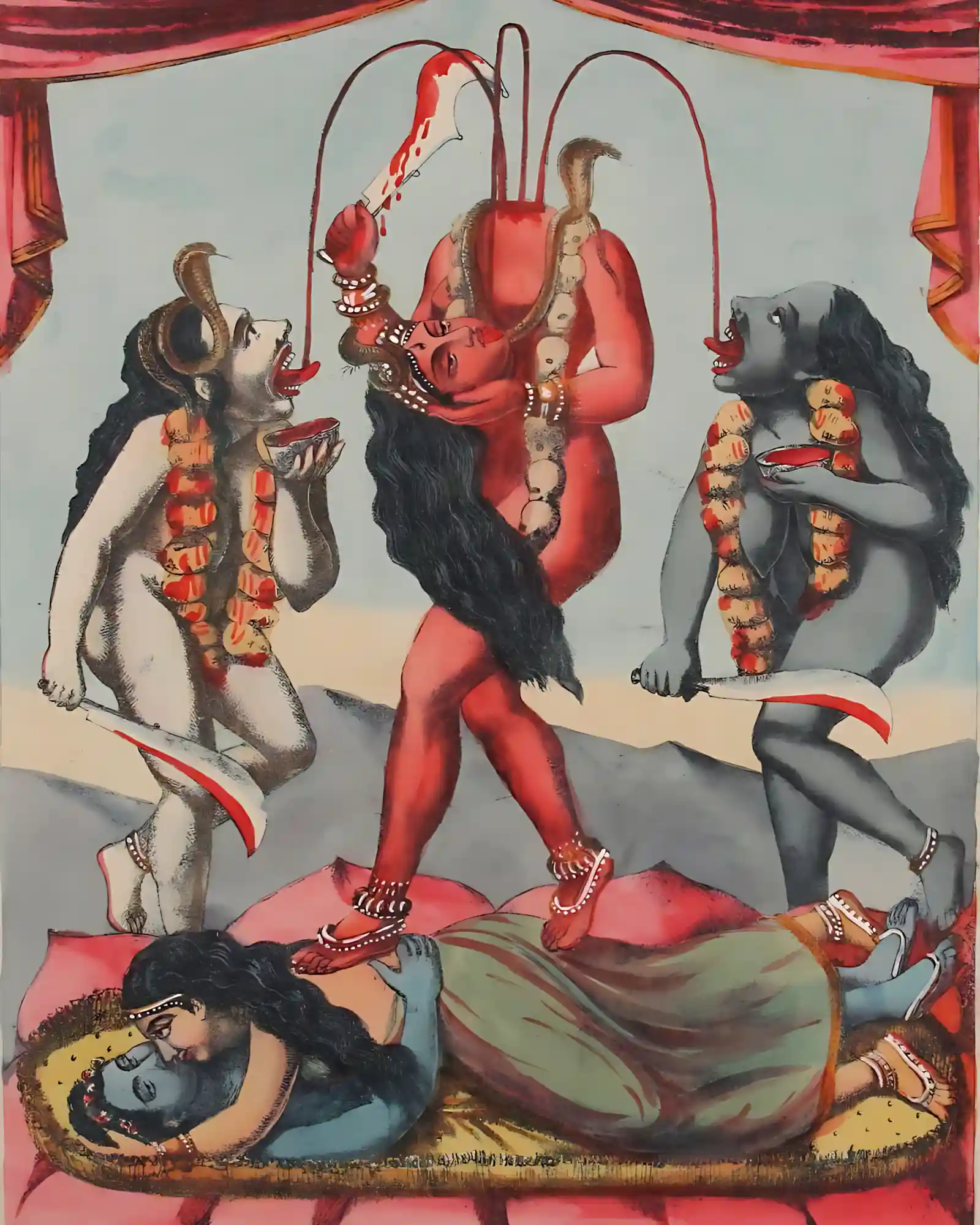
The Sanskrit word ‘tantra’ refers to texts regarded as revelation from Shiva that arose in early medieval India. This new religion spread quickly, attracted the patronage of kings, and travelled to South-East Asia and on into China and Japan.
Few traditions have divided opinion so sharply: the Indologist Monier-Williams called the Tantras ‘mere manuals of mystics, magic, and superstition of the worst and most silly kind’, while the twentieth-century guru Osho called Tantra an experience beyond words.
In this course we study what the Tantric traditions are: their origins and core texts, their ritual and yoga, their dualist and non-dualist philosophies, and their continuing life in India and Nepal, ending with Tantra in the modern West.
The course runs over seven weeks, created and tutored by Prof. Gavin Flood FBA, Academic Director of the OCHS and author of The Tantric Body, with over four hours of video lectures, 200 pages of course notes and an essay for a Completion Certificate.
Tantra needs to be understood within the culture from which it arose. What was Hinduism like in the 7–11th centuries? How does Tantra define itself? What are its main texts? What is the difference between a follower of the Tantras and a follower of the Vedas?
 We now delve into the main Tantric tradition – Shaiva Siddhanta (teachings of Shiva). This was a householder religion that did not reject orthodoxy but added its own rites in the belief that the guru guaranteed liberation and/or pleasure and power in higher worlds.
The Shaiva Siddhanta developed its own scriptures and maintained a distinction between self, God, and world. Originating in Kashmir the tradition spread throughout India and is still present in the South where it became deeply influenced by Tamil bhakti traditions.
Tantra is mostly known for its unorthodox practices, its divinisation of sex and use in ritual.
In this session we will examine how practices regarded as polluting arose within the traditions focussed on the Goddess and Shiva in his ferocious form as Bhairava. These traditions – sometimes referred to as Kashmir Shaivism – rejected the Veda. Sex, blood rituals, and cremation ground asceticism were part of these traditions.
Tantra came to be adopted by other traditions, partly because of its success in attracting patronage of the powerful. The more orthodox religion of Vishnu adopted Tantra and developed a tradition called the Pañcaratra.
Texts such as the Jayakhya-samhita were influenced by Shaiva philosophy and follow the same pattern of worship and yoga. Here we look at the divinisation of the body and the worship of God in the heart in this tradition.
We will also look at how Tantra later influenced the worship of Krishna in Sahajiya religion.
OM JUM SAHA
Eye mantra from the Netra-tantra to vanquish obstacles
In this session we focus on the Netra-tantra as way of understanding how these texts are studied.
This is a Shaiva text that was very popular in Kashmir from around the eighth to eleventh centuries CE and was copied for a king of Nepal in 1200. It is about how the eye of Shiva – and the eye mantra – protect us from demons and free us to realise our identity with Shiva.
In this session we examine two distinct philosophies.
On one hand we have the dualist philosophy of the Shaiva Siddhanta that maintains an eternal distinction between self and a wholly transcendent God.
On the other, we have the non-dualist tradition of Kashmir Shaivism that maintains an identity between self and God. We will examine Abhinavagupta’s famous arguments in support of non-dualism against the dualists and the Buddhists. In the Recognition (Pratyabhijña) school the goal of life is the realisation that ‘I am Shiva who is pure consciousness’.
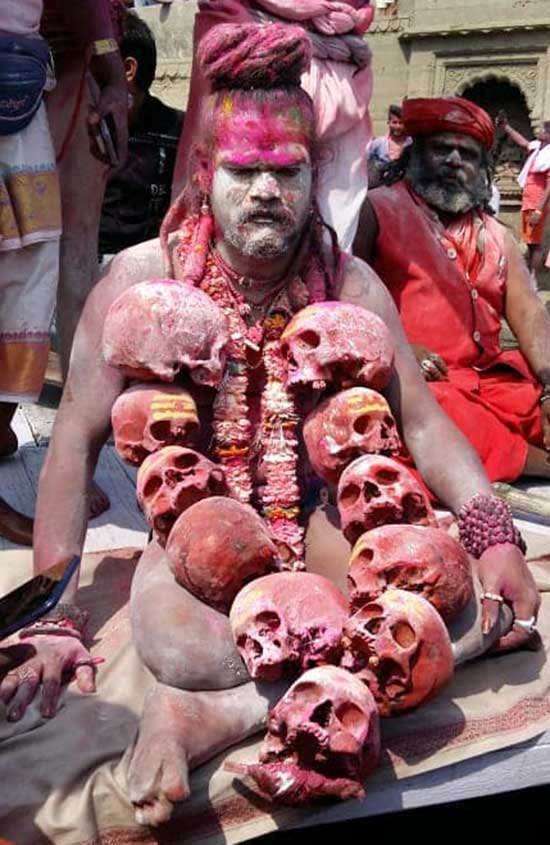
Tantric traditions are still thriving and sects such as the Aghoris adopt the unorthodox practices of the earlier Tantric traditions. The worship of the Goddess is also of major importance in Nepal and Assam and we will examine these traditions and how they are affected by modernity.
Lastly, we look briefly at Tantra in the West and modern Tantric gurus in the age of the internet.

Course Tutor
Prof. Gavin Flood is Professor of Hindu Studies and Comparative Religion at Oxford University, Academic Director of the Oxford Centre for Hindu Studies, and Senior Research Fellow at Campion Hall. His publications include Religion and the Philosophy of Life (2019), The Truth Within: A History of Inwardness in Christianity, Hinduism, and Buddhism (2013), The Importance of Religion: Meaning and Action in Our Strange World (2012), and The Ascetic Self: Subjectivity, Memory, and Tradition (2004). He is also the General Editor of the series ‘The Oxford History of Hinduism’ and is a Fellow of the British Academy.