Oxford Centre for
Hindu Studies Online
Oxford Centre for
Hindu Studies Online
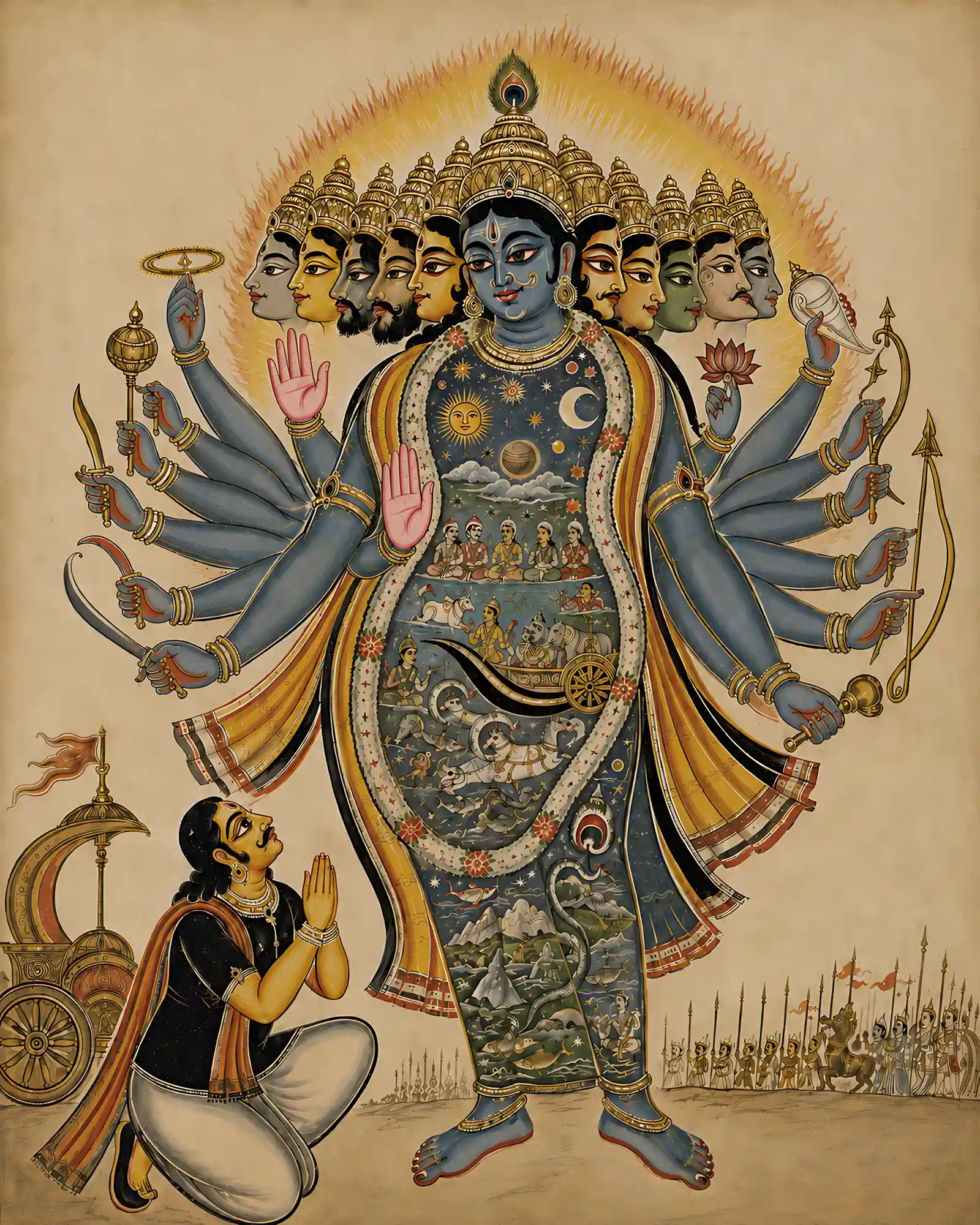
The Bhagavad Gita is the best known of all Hindu texts: seven hundred verses in which Krishna, on the eve of the battle of Kurukshetra, answers Arjuna’s refusal to fight with a complete exposition of belief and practice. This course reads the Gita chapter by chapter, from the opening crisis to the closing teachings on devotion and grace.
Each session provides an English translation of the chapters under discussion, clarifies key Sanskrit terms, and draws on the traditional commentaries of Shankaracharya, Ramanujacharya, and Madhvacharya. We follow the text’s own progression: from Karma Yoga and the meditational path of dhyana, through the turn to devotion and the revelation of Krishna’s universal form, to the final analysis of the three gunas and the promise of divine grace. Along the way we consider the Gita’s place within the Mahabharata, the views of contemporary scholars, and the text’s relevance to the modern world.
The course runs over seven weeks, with more than five hours of video lectures, a 153-page coursebook, and an essay assessment.
We will look for the key themes of the Bhagavad Gita. From this we will establish the main ideas presented in each chapter of the Gita.
The Bhagavad Gita appears as the sixth book of the Hindu epic, the Mahabharata – just prior to the eighteen-day battle of Kurukshetra. The hopes of the Pandava faction rest largely on the martial prowess of Arjuna. But, at the start of the Gita, we find Arjuna unwilling to wage war against his own family members. At this point Krishna begins to offer instruction to Arjuna. Initially, Krishna aims to persuade Arjuna that waging war is not necessarily wrong. However, the text goes far beyond this initial aim. It develops into a full exposition of belief and practice that has had an immeasurable influence on Hindu thought and practice.
The course consists of seven sessions delivered on a weekly basis.
In this course we consider the Bhagavad Gita chapter by chapter. We establish the main themes it pursues and identify the significance of this famous scripture.
For each session we provide an English translation of the chapters under consideration and discuss their significance. We clarify Sanskrit terms and look at traditional commentaries on the Gita, particularly those of Shankaracharya, Ramanujacharya, and Madhvacharya.
We will also reflect on the relevance of the Gita to the modern world.
Our course is divided into seven areas of study. Each session looks at the role of the Bhagavad Gita within the Mahabharata, its status within the Hindu tradition, and the views of contemporary scholars. The sessions are based on a progressive reading of the text, taking each chapter in turn.
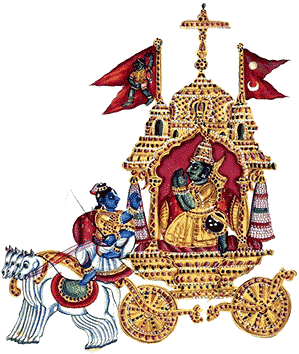
In this first session we will consider the position of the Bhagavad Gita within the Mahabharata and its status within the Hindu tradition. We look briefly at the views of contemporary scholars. We will then read through the first chapter and consider Arjuna’s refusal to fight, which prompts Krishna to begin his teaching.
In this session we will read through Chapter 2 and consider Krishna’s initial responses to Arjuna’s objections. We then concentrate on the idea of a Karma Yoga, which Krishna offers as a direct response to Arjuna’s fear of sin. Karma Yoga shows how a person can fulfill social obligations while trying to attain the highest spiritual goals. We will continue to look at Karma Yoga in Chapter 3 where it is specifically explained.
Krishna continues his discussion of Karma Yoga in Chapter 4 and 5. He then moves on to an explanation of dhyana or meditation in the sixth chapter. This meditational yoga leads to direct perception of the inner self, the atman (or soul). This realisation leads to liberation from the cycle of rebirth.
The final verse of Chapter 6 marks a dramatic turn in Krishna’s teaching as he introduces the idea of a Supreme Deity. This Supreme Deity creates and controls the world and delivers those who are devoted to him. This is another central idea in Hinduism and it is here that we find one of its clearest expositions. In Chapters 7, 8, and 9 of the Bhagavad Gita we consider monotheism and devotion to God as a spiritual path.
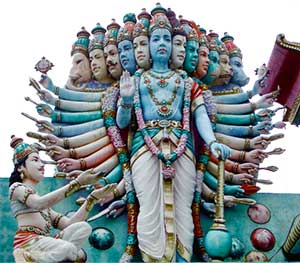
We come to the middle chapters of the Bhagavad Gita. Here, Krishna not only teaches Arjuna about the nature of the Supreme Deity but reveals himself to be that Deity. Responding to Arjuna’s prayer he reveals his divine identity as that which is all things and pervades the entire creation. We will read through Chapters 10, 11, and 12 and consider the revelation of Krishna’s Vishva Rupa (universal form) and the concluding teachings on the way of bhakti (devotion).
In this session we will read through Chapters 13, 14, 15, and 16. After the great revelation of the divine in Chapter 11 and the emphasis placed on devotion to God, the Bhagavad Gita now covers topics that serve to reinforce the teachings that have gone before. A theme running through these later chapters is the emphasis on Samkhya ideas. In this session we consider the ways in which Krishna employs concepts derived from the Samkhya system.
We conclude our reading of the Bhagavad Gita by considering Chapters 17 and 18. Here again we find many ideas, including an exploration of the way the three gunas (sattva, rajas and tamas) can be identified within this world. The Bhagavad Gita ends its teachings by revisiting the main ideas it has presented earlier, finally concluding with a further emphasis on the importance of devotion and the power of divine grace in saving the devotee from rebirth.

Course Tutor
Nick is the Director – and the heart and soul – of the OCHS Continuing Education Department. He is a dedicated teacher with decades of experience in making sometimes-confusing traditions relevant. He has created over a dozen online courses and is working on many more. He has written translations and commentary on Bhagavad Gītā and the Yoga Sūtra. Nick received his Phd from Lancaster University (1995). His thesis was on the religious teachings of the Mahabharata.